Most weeks, somebody sends me a photo of a doodle with a pelt on its chest and asks whether they can fix it at home. Sometimes the answer is yes. Sometimes the honest answer is that the dog needs a shave-down, a vet check, and a real conversation about brushing, and no tool on the market changes that.
But if the mats are still loose enough that you can slide a comb under them, or the coat is simply overdue for a trim, home grooming is very doable. I have groomed out of a converted cargo van in Austin for six years and out of salons for four before that, and the home grooms that go wrong fail in the same three places every time: wrong blade, no table, no plan. Decent dog clippers for matted coats help enormously, but the order you work in matters more than the tool you buy.
What follows is the workflow I would hand a client who wants to do this themselves, the two pieces of gear I would have them buy first, and the places where I would tell them to stop and call someone.
Why you should trust me
I am a fear-free certified groomer, which in practice means I spend more time reading dogs than I spend reading boxes. I do forty-odd dogs a week, and in Austin that means a lot of doodles plus labs, goldens, huskies, and the occasional matted rescue that arrives in a trash bag. I own three clippers I actually use and a shelf of ones I retired.
I also keep a job book. Every blade temp gets logged with an infrared thermometer, every dryer gets a decibel reading, every deshedding session gets weighed in grams on a kitchen scale, and every cordless runtime gets timed on my phone until the light blinks. That habit started after a hot blade gave a golden retriever a mild blade burn in July. The dog was fine. I was not. Now the numbers go in the book before the opinion goes in the review.
If you want the short version of everything I have learned: a clipper has one job, which is to cut coat without burning the dog. Everything else on the box is a sticker.
How I picked and how I tested
This is not a guide to the $200 pro clipper I run on my table. If you are grooming one dog at home once a month, that tool is wasted on you, and you should not buy it. This is the first-day setup: one clipper that can get through a curly, mat-prone coat, and towels that actually dry a dog instead of just moving water around.
Here is what I look for in a home clipper. It has to keep moving through thick, curly coat without bogging down and stalling mid-leg, because a clipper that stops mid-stroke leaves you with a half-finished leg and a dog that has lost patience. It has to stay cool enough that you can rest it against the back of your hand after ten minutes of work, since blade heat is the number nobody prints on the box and the number that causes blade burn. And it has to be quiet enough that the dog is not lip-licking and yawning through the whole groom, because those are stress signals, not personality.
For towels, the test is simpler. A good dog towel takes water out of the coat instead of spreading it, it stays soft after a dozen washes, and you have more than one of them, because a single wet towel stops absorbing somewhere around the second pass. Absorbency and quantity matter more than the label on the package.
What you need on the table before you start
Set yourself up at your own waist height, not on the floor. Grooming a dog on the floor is how backs get wrecked and dogs get cornered, and a dog that is cornered will not stand still for anything you do next. A table, a nonslip mat, a way to keep the dog from stepping off, your clipper, a spare blade if you have one, towels, shampoo, cotton pads, styptic powder for nails, and treats. Everything within arm's reach, because you do not want to leave a dog alone on a table to go find something.
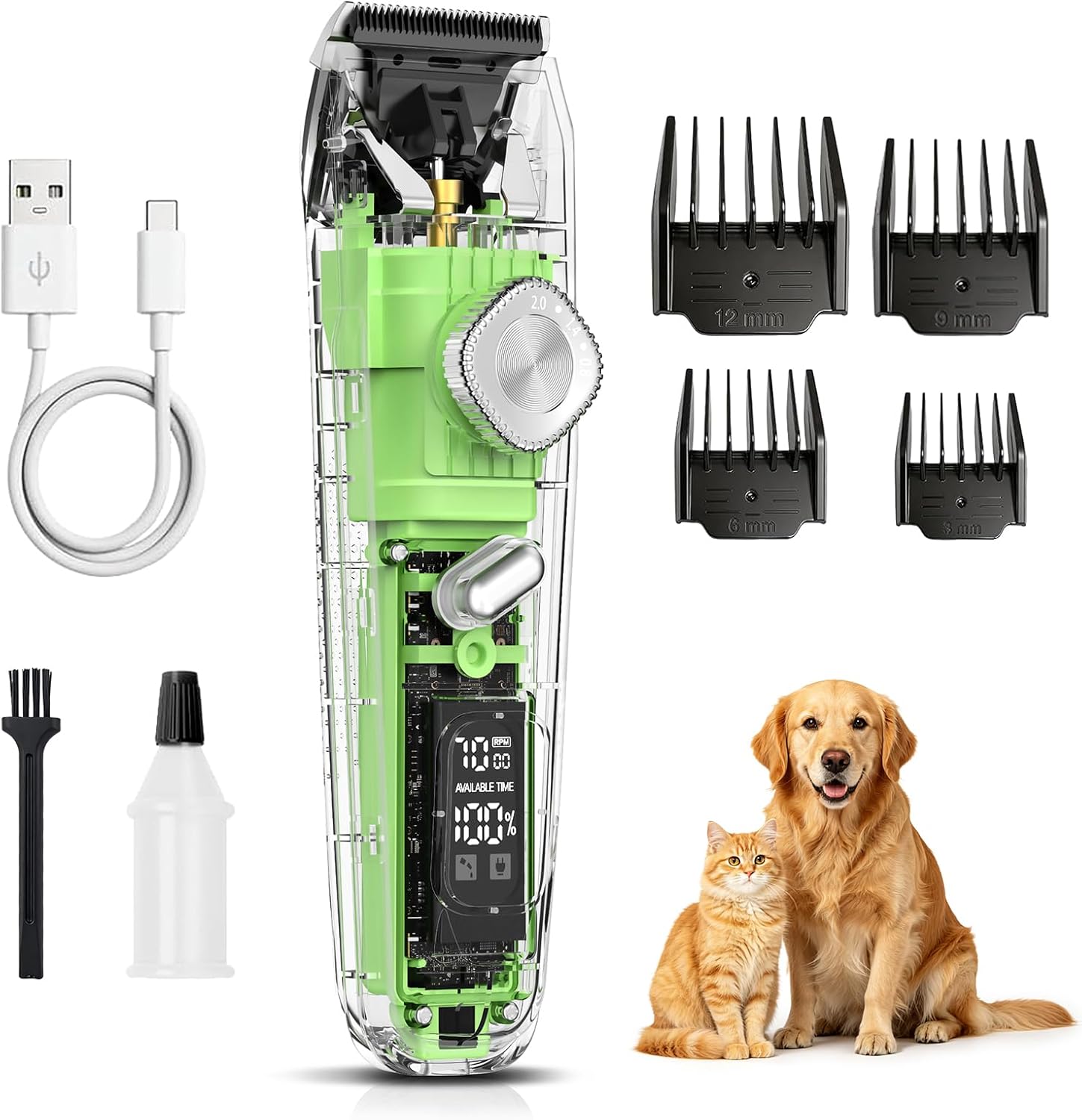
The clipper: Dog Clippers for Grooming Thick Hair Curly Coats Matted Fur for Pets
 Visit on Amazon →
This is the tool this whole article is about, and it is the one I would put in the hands of somebody who is not ready to spend pro money. It is built for exactly the coat that causes the most trouble at home: thick hair, curly coats, and matted fur. That is not a marketing phrase to me, it is a job description, because a curly doodle coat and a matted coat are the two things that stall a weak motor and dull a cheap blade in the first five minutes.
Two habits matter more than the clipper itself. First, keep the blade moving. A blade that sits still in one spot heats up and starts irritating skin, so you glide, you do not park. Second, work in the direction the coat grows and let the blade do the cutting instead of pushing the clipper through a mat like a plow. If you feel the motor load up, stop, clear the blade of packed hair, and start again from a fresh angle. Hair packed into the blade is the number one reason a home clipper seems to lose power halfway through a groom.
Flaws but not dealbreakers: This is a home clipper, not a salon clipper, so it wants clean, dry, reasonably detangled coat and it wants you to keep it cool. If your dog is pelted to the skin, no clipper at this level is the right answer. That is a shave-down by somebody with a stronger tool and a quieter room.
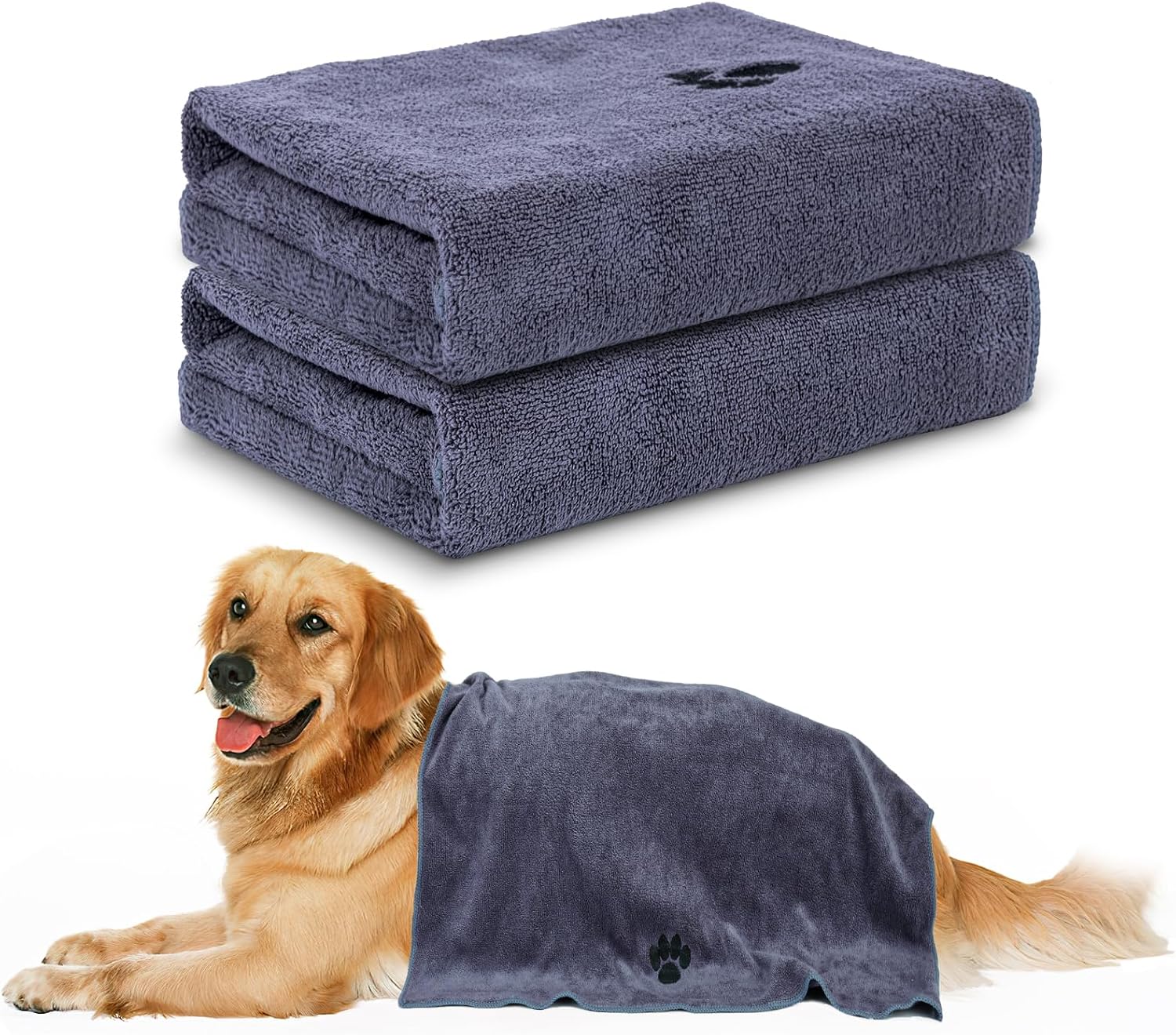
The towel: 2 Pack Microfiber Dog Towels for Drying Dogs, Super Absorbent and Soft
 Visit on Amazon →
Nobody buys towels first, and everybody should. A microfiber dog towel does the heavy lifting before any dryer or any brushing, and it is the difference between a dog that air-dries in twenty minutes and a dog that sits damp and starts to mat again in the crate. The two-pack matters for a reason I learned the hard way: the first towel does the bulk of the water, the second towel finishes, and if you only own one, you are trying to dry a wet dog with a wet towel by the end.
Technique is everything with these. Press and squeeze the coat instead of rubbing it, especially on curly coats, because rubbing wet curly hair in circles is how you felt it together. Start at the back, work forward, then do the legs and the feet, then the head last, because the head is where dogs have the least patience. Super absorbent and soft is what you want in a towel that touches a face and ears.
Flaws but not dealbreakers: Microfiber holds onto oil and smells if you leave it wadded up wet, so hang it to dry the same day. Two towels will not fully dry a husky in spring. That is what a high-velocity dryer is for.
The actual workflow
Step one: read the coat before you touch it. Run your hands over the dog from the shoulders back. A double coat, like a lab, golden, or husky, is a topcoat plus a dense undercoat, and it sheds and blows out rather than growing continuously. A single coat, like a poodle, doodle, Yorkie, or bichon, grows the way human hair grows and mats instead of shedding. The answer is different for each, and it changes what you do with the clipper. Marketing does not know which dog you own. You do.
Step two: find the mats and grade them. Slide a comb through the coat. If the comb stops and you can still work the teeth under the tangle, that is a loose mat you can manage. If the coat feels like a single solid sheet against the skin, that is a pelt, and pelts do not get brushed out. They get shaved down and started over. A groomer who tells you otherwise is selling you a second appointment.
Step three: clip the mats, do not fight them. Take the clipper and go under the mat rather than straight through the middle of it. Cutting under a mat takes the tension off the skin and lets the coat come away in one piece instead of yanking the dog's skin with every stroke. Keep the blade flat to the skin, keep it moving, and stop when the dog starts telling you it has had enough.
Step four: check the blade every ten minutes. Rest the blade against the back of your hand. If it is uncomfortable to hold there, it is too hot for the dog, full stop. Swap blades, let it cool on a hard surface away from the dog, and give the dog a break while you wait. A hot blade does not just burn skin. It also leaves a rough, uneven finish that you will have to fix later.
Step five: bath after clipping, not before. This surprises people, but bathing a matted dog first tightens the mats and pushes them closer to the skin, which makes your job twice as hard. Clip first, then bathe, then dry. Use a shampoo that rinses clean in two passes, because residue left in the coat turns into new tangles within a week.
Step six: dry with towels first, then air or a dryer. Squeeze with the towel, change to the second towel, then get the dog out of the damp stage. If you have a high-velocity dryer, use it on a low setting with the dog used to the sound first. If you do not, keep the room warm and keep squeezing until the coat stops feeling cool and damp at the base.
Step seven: ears, nails, and the parts nobody talks about. Clean the visible part of the ear with a cotton pad and a cleaner, never a cotton swab down the canal, because the ear canal is L-shaped and a swab just packs wax deeper. Trim nails with small, sharp cuts and keep styptic powder nearby for the quick. Do the sanitary trim and the paw pads last, when the dog is tired and you are almost done.
Step eight: brush the coat out the next day. Whatever you clipped will grow back, and the coat you have just cleaned is the coat you need to maintain. Line-brush, then rake, then slicker, then finish. Most people who tell me their dog hates brushing are skipping the first two steps and yanking with the last one.
Where home grooming goes wrong
Shaving a double coat. Clipping a husky or a golden down to the skin can permanently change how the coat grows back and how the dog regulates temperature. Double coats get bathed less, brushed more, and blown out in spring. They do not get shaved for convenience.
Bathing a pelt. Water tightens mats. If you have a pelted dog, clip first or call a groomer.
Scissors near the eyes, ears, and tail base. I have seen more injuries from home scissor work than from any clipper. If you cannot see the skin, do not put a shear there.
Working past the dog's signals. Lip licking, yawning, whale eye, and a stiff, still body are all the dog telling you the tool is too loud, too hot, or too rough. Stop, reset, come back to it. A groom that takes two sessions and ends with a relaxed dog beats a groom that takes one session and ends with a dog that hides when you pick up the clipper.
Ignoring skin problems. Red, weeping, or yeasty skin is a vet visit, not a grooming problem. Clean it, dry it, and let a veterinarian look at it before you run a blade over it.
What this all costs
The setup here is deliberately small: one clipper built for thick and curly coats, one two-pack of microfiber towels, and the things you already have in a bathroom. Compare that against a salon appointment every six to eight weeks for the life of the dog, and the gear is the cheapest part of grooming. Check current Amazon price on both items before you decide, because both sit at the low end of what I recommend, and neither is the tool I would hand a professional.
Do the math on time instead of money. A full groom at home takes me about an hour and a half on a cooperative dog, and closer to two and a half if the dog is nervous and we are stopping for breaks. That is the real cost, and it is why I tell people to start with a bath and a brush-out before they ever pick up a clipper. Learn the coat, learn the dog's signals, and the clipping gets easy.
That is the job. The blade is the tool, the dog is the teacher, and the towels are the thing you should have bought first.